Why Your ADHD Child Cannot Hold Onto What You Just Said (Even When They Looked Right at You)
You said it once.
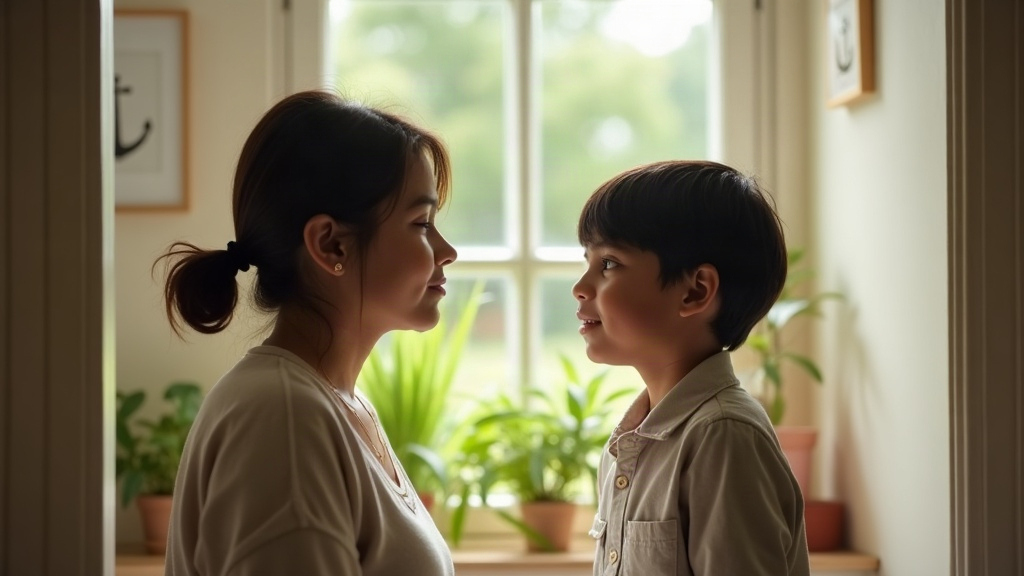
They looked right at you. Eye contact. Maybe even nodded.
Thirty seconds later, it was gone.
So you said it again. And again. By the fifth time, your voice had changed. By the tenth time, you were not explaining anymore. You were just trying not to lose it entirely.
And somewhere underneath all of that frustration is a question you keep coming back to:
Why does this keep happening?
It is not attitude. It is not selective hearing. It is not your child deciding that what you said does not matter.
It is working memory. And once you understand what working memory actually does inside an ADHD brain, the whole picture shifts.
What Working Memory Is (And What It Is Not)
Working memory is not the same thing as long-term memory. It is not storage. It is more like a mental whiteboard, a small, temporary holding space where the brain keeps information active while it does something with it.
When you say, "Finish your snack, put your plate in the sink, and then go put your shoes on," your child's brain has to hold all three of those pieces at once while also navigating the kitchen, resisting the distraction of the dog, and managing the fact that their socks feel wrong.
For a neurotypical brain, that whiteboard holds. For an ADHD brain, it erases fast.
Not because the child chose to forget. Because the brain physically did not retain it.
Working memory is one of the ten executive function skills described by Peg Dawson and Richard Guare, and it is the one that shows up most often in the daily friction of family life.
Why the ADHD Brain Erases So Quickly
The prefrontal cortex is the part of the brain responsible for working memory, planning, and holding information long enough to act on it. In children with ADHD, that system develops more slowly and works differently under cognitive load.
Here is what that means in real terms:
Your child hears you. The information enters their brain. Before it can be held and acted on, something interrupts the signal. That something is often sensory input, an intrusive thought, a feeling, or simply the pace of transition itself. By the time they walk to the next room, the whiteboard has already been wiped.
This is not a listening problem. It is a holding problem. And those two things require completely different responses.
Why Eye Contact Does Not Mean They Registered It
This one catches parents off guard more than almost anything else.
Your child looked right at you. You are certain they heard you. And they did. But hearing a sentence and encoding it long enough to act on it are two separate neurological events.
Eye contact tells you that their attention was on your face. It does not tell you that the prefrontal cortex successfully retained the instruction through whatever came next: a noise from outside, a shift in body sensation, the pull of something visually interesting, or the simple act of turning around and walking away.
For an ADHD brain, that transition, the moment of turning and moving, is often enough to wipe the whiteboard clean.
It is not defiance. It is not manipulation. It is the gap between receiving information and holding it.
Why Repeating Yourself Does Not Fix It
More repetition does not build working memory capacity. It builds frustration for both of you, and over time, it teaches the ADHD nervous system that your voice is background noise.
This is not your child being disrespectful. It is a predictable neurological outcome of a system that has been flooded with more input than it can retain.
When the nervous system is already overloaded, adding more words makes retention worse, not better. The brain does not have more space just because you said it louder or more times. The whiteboard does not grow.
What changes retention is not volume or repetition. It is structure. It is the way information is delivered before the moment the brain has to act on it.
A Confession, Because I Do This Too
I leave my lunch bag out on the counter every weekday morning. At breakfast I am not thinking about lunch. I am thinking about getting out the door on time. The cue protects me from forgetting something I actually care about.
I have ADHD, and I did not know that for years, including years when I was already a practicing pediatrician. I spent a lot of that time telling children to pay attention.
So when I say the answer is structure rather than effort, I am not correcting you from above. I built a scaffold for myself because I needed one.
I am not clueless. Sometimes I am just cue-less.
What Actually Helps: Scaffolding the Instruction
Scaffolding means changing the external environment so the brain does not have to hold as much on its own. It is not about doing everything for your child. It is about building a bridge between the instruction and the action.
Here is what that looks like in practice.
One instruction at a time. A three-part instruction requires the ADHD brain to hold all three steps simultaneously while also managing the transition. That is too much load at once. Give one step. Wait for completion. Then give the next. It feels slower in the moment. It is actually faster across the day, because you are not repeating steps four and five of a sequence your child never retained.
Get into their space first. Calling instructions from another room means you are asking the brain to hold information while also navigating distance, distraction, and transition. The encoding never had a real chance. Move to where they are. Make eye contact. Wait until their body is still before you start. That moment of stillness is not a power move. It is giving the prefrontal cortex a better chance to receive what you are about to say.
Use visual anchors. The ADHD brain retains visual information more reliably than auditory sequences. When the internal whiteboard is unreliable, an external one helps. A written checklist on the bathroom mirror. A picture sequence on the refrigerator. A dry-erase board with the morning steps. A sticky note on the door they are about to walk through. The point is to move the information out of a place the brain cannot hold and into a place the brain can see.
Reduce competing input at the moment of instruction. If the television is on, a sibling is talking, and your child is mid-bite when you give the instruction, the prefrontal cortex is already managing too much to register a new input reliably. Turn the volume down. Wait for a natural pause. Let them finish the bite. You are not being controlling. You are reducing the interference that will erase your words before they land.
Ask them to repeat it back. Not as a test. Not as a consequence. As a scaffolding tool. "Can you tell me the one thing I just asked you to do?" gives the ADHD brain one more opportunity to encode the instruction through production, not just reception. Speaking it out loud runs a different neurological pathway than simply hearing it. If they cannot repeat it back, the brain did not hold it. That is useful information. It means you give it again, not get louder about the fact that they missed it.
A free space for parents raising children with ADHD and big feelings. Real support, practical tools, and a reminder that you are not doing this alone.
Join free →What to Do When It Still Falls Apart
Even with all of this in place, there will be days when the regulation is low and the capacity is even lower. A tired ADHD nervous system, a hungry one, an overwhelmed one: these have even less prefrontal resource available. Working memory degrades further when the body is dysregulated.
On those days, the scaffolding has to be even more reduced, not more intense. One step. Physical proximity. As little auditory load as possible.
That is not lowering expectations. That is matching the support to the actual available capacity. That is how a child eventually internalizes a skill instead of just failing to perform it on demand.
What This Means for Your Child Long-Term
Working memory in ADHD is not permanently fixed at its current level. With the right environment, consistent external scaffolding, and a nervous system that is not chronically in stress response, capacity does develop over time.
But it develops through access, not pressure.
Every time the external structure holds what the brain cannot yet hold on its own, the child experiences what success feels like inside that sequence. That experience, repeated over time, is what builds the internal version of the skill.
Repetition of instruction does not build that. Structure does.
What You Can Let Go Of Right Now
The belief that your child heard you and chose to ignore you.
The assumption that more reminders will eventually click.
The idea that you are failing because you have to put the steps on a whiteboard or walk to the next room before you speak.
None of that is failure. That is how an ADHD brain works. And your job is not to make the brain work differently through pressure. It is to build the environment that works with the brain that is actually in front of you.
You do not need to repeat yourself more. You need a structure that holds the information so the brain does not have to.
Frequently Asked Questions
My child can remember every detail of a video game but cannot remember to put their shoes on. What is happening?
This is one of the most disorienting parts of ADHD for parents to witness. Working memory is not a single uniform system. It functions very differently depending on interest, emotional engagement, and neurological arousal. A video game provides constant sensory feedback, immediate reward signals, and high novelty, all of which increase what gets encoded and retained. A verbal instruction to put shoes on does not carry that same activation. That is not a choice. It is the difference in how the ADHD nervous system allocates attention and memory resources based on what it finds engaging versus what feels flat and low-stimulation.
Does repeating myself actually make things worse over time?
It does not make your child worse as a person. But it does create a pattern the nervous system adapts to. When instructions are reliably repeated many times before anything is expected to happen, the brain learns to wait. It is not defiance. It is a conditioned response. The brain stops treating the first instruction as a signal to act, because experience has taught it there will be more. Reducing repetition while increasing structure gives the first instruction more weight, not because you are firmer, but because the environment now supports the brain in actually holding and acting on it.
How is this different from my child just not listening?
Not listening implies a choice. Working memory failure is a neurological event. Your child is not deciding to disregard you. The information enters, the brain cannot hold it through the transition or competing input, and by the time action is required, the instruction is gone. The distinction matters because it changes what you do next. If it is a listening problem, you address motivation. If it is a working memory problem, you address structure. The second one matches what is actually happening.
My child is older. Is it too late to build working memory through structure?
It is not too late. Working memory capacity continues to develop into early adulthood, and for ADHD brains that curve is shifted later than in neurotypical peers. An older child or teenager still benefits from external scaffolding, visual anchors, and reduced cognitive load at the moment of instruction. The form of those tools changes with age. A teenager is not going to use a picture chart, but a shared digital checklist or a brief written note does the same job. The mechanism is identical regardless of age: external structure holds what the internal system cannot yet hold on its own.
When should I look for professional support beyond strategies at home?
When the daily load of managing your child's working memory gaps is affecting your relationship, your own regulation, or your child's sense of themselves, that is when outside support becomes important. Home strategies are valuable and necessary. They are also not sufficient on their own when the dysregulation is significant, when anxiety or mood is layered on top of the ADHD, or when your own nervous system is too depleted to implement structure consistently. If you are in Texas, Anchored Pediatric Mental Health works with children in exactly this space. If you are elsewhere, your child's pediatrician is the right place to start.
You do not have to do this alone.
Warmly,
Dr. Grizelda Anguiano, MD, FAAP
Anchored Pediatric Mental Health
Anchored Coaching
Educational information, not medical advice. This content does not diagnose any individual child and is not a substitute for evaluation by your child's physician. Coaching is educational skill instruction, not therapy, medical treatment, psychological testing, or a diagnostic evaluation, and it works alongside an IEP or 504 plan rather than in place of one.
Three ways to work
with Dr. Anguiano
Wherever you are in this journey, just beginning to understand ADHD or ready for deep, personalized support, there is a place for you here.
A free assessment and PDF guide to understand where struggles are happening and why.
Get it free →Monthly live webinars, video resources, and a community of families, with Dr. Anguiano leading every session.
Join us →Available in packages of four or nine sessions. Open to parents anywhere.
View options →In Texas and need ADHD medication management for your child? Anchored Pediatric Mental Health offers comprehensive medical care for children across Texas.